I Love Looking At Nudes
My favorite erotic art from Miami Art Week 2025
There was a ton of political art to be seen at Miami Art Week, but I prefer beauty over the grotesque. Plus, the sexual IS political, and just so much nicer to look at.
During my three days in Miami, I visited the beach, the pool, the jacuzzi, two art fairs, and one museum: Untitled Miami, Scope Art Show, and the Rubell.
Below, the best erotic art I saw.

Flower, 2024, by Jade Thacker
This work was inspired by vintage erotica, so of course I was drawn to it. Isn’t it kind of amazing that ogling nudity when it’s on a canvas is not considered impolite or perverted? Art!
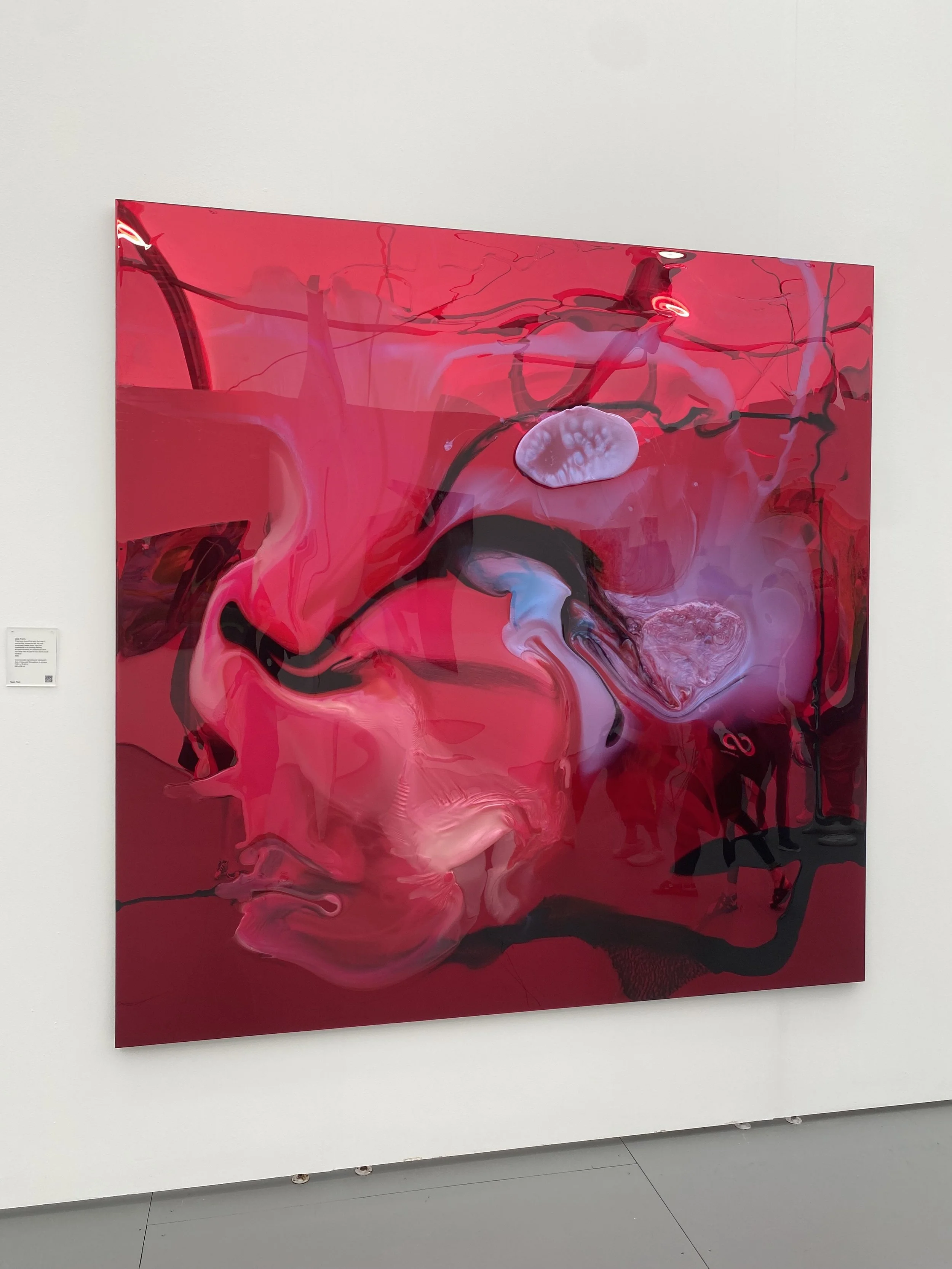
It had been love at first sight, but now it was too late: he was too old, too cold, emotionally freezer burnt, rigid, too comfortable in his bruising defining acceptance before he understood Adam was never who he said he was and he could never be, 2025, by Dale Frank
I absolutely love when an artist titles their work something long and mildly deranged—nothing makes me more disappointed than a work called “Untitled”.
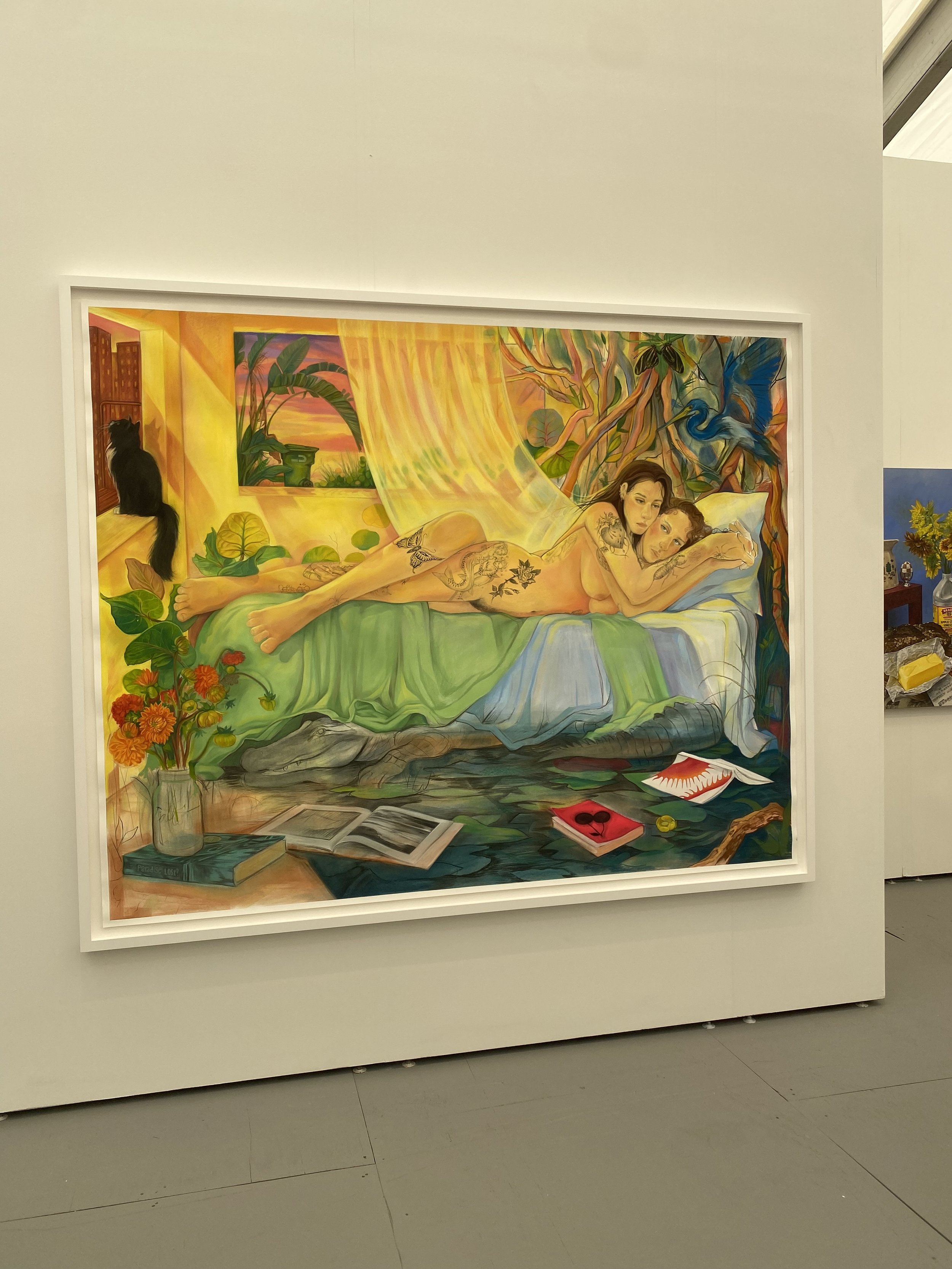
Paradise Lost, 2025, by Alina Perez
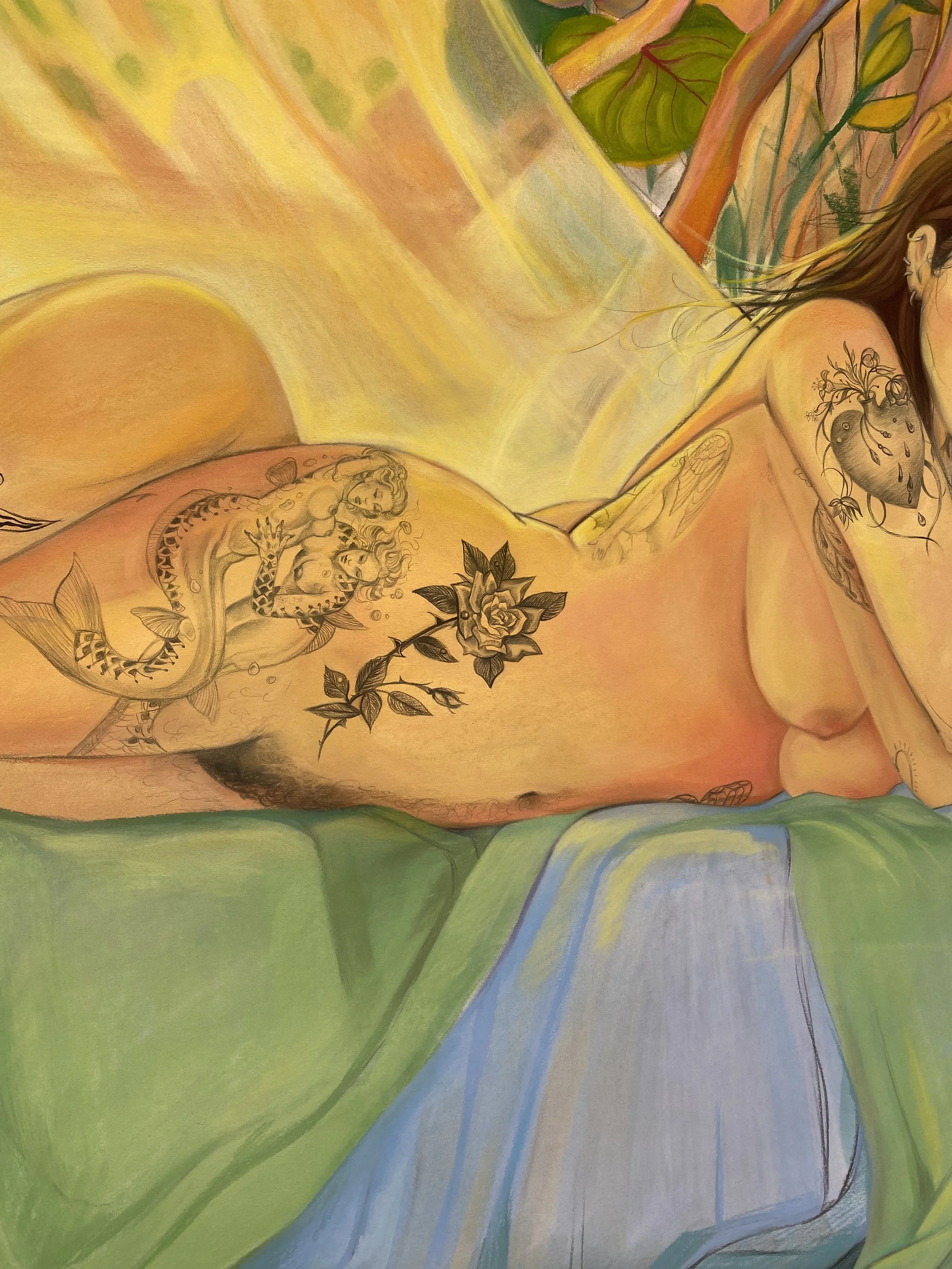
I reveled in how crisp that tattoos were painted while the rest is a soft fuzzy glow. The happy trail is of epic proportions (I zoomed for you below) and these lovers are so intertwined I don’t want to interrupt them.
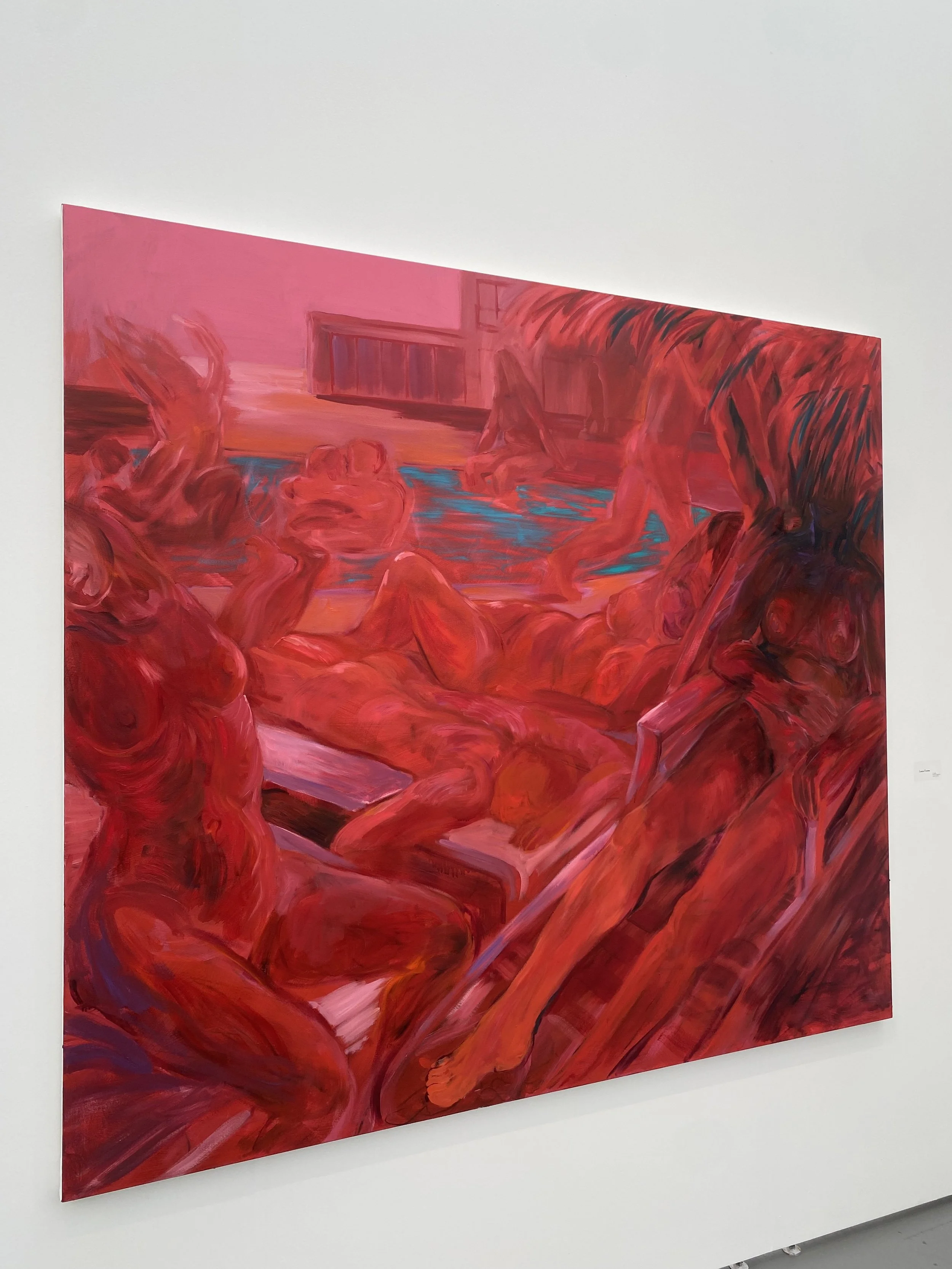
Laura Footes’ Bather Series for Untitled Miami
This painting looks how Miami feels: neon, hedonistic, bodies, bodies, bodies, and that characteristic pop of turquoise water.
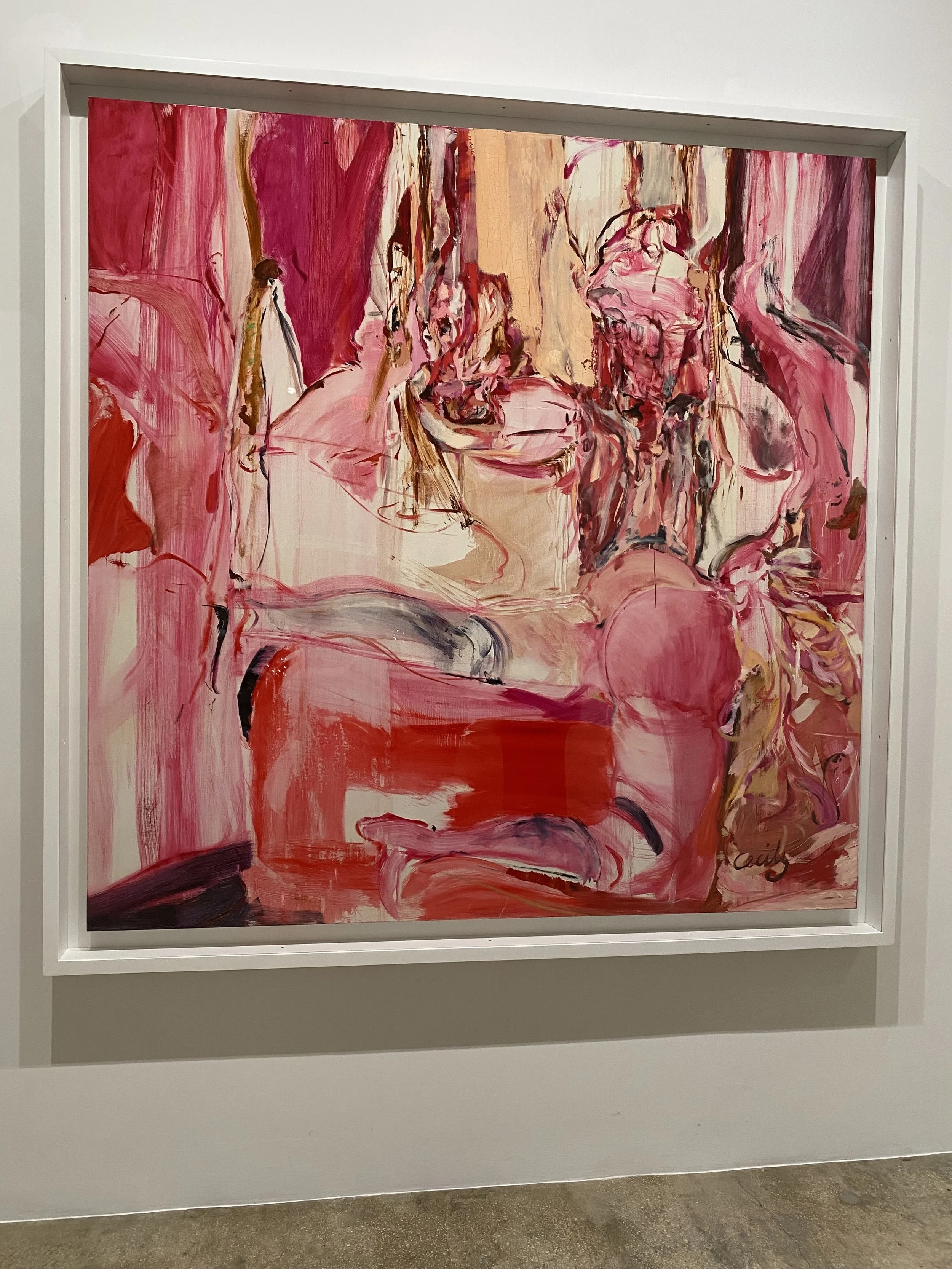
Service de Luxe, 1999, by Cecily Brown at the Rubell Museum, Miami
I loved that the Rubell Museum included quotes directly from the artists to explain their work. I can’t say it better, so I’m sharing the text below.
By the time of Service de Luxe, in 1999, I was beginning to move away from the highly legible scenes of eroticism that had followed The Gang’s All Here. In Service de Luxe I was trying to make a painting that had a charged subject matter-it’s based on photographs from the late 19th century of French girls being spanked-but also had as much of a thrill in the way it was painted.
This painting now seems to prefigure much of my later work, in which, although there is a dominant figural motif, the image has become more ambiguous. Again, the palette is of the body. A warm, chromatic haze encompasses the two figures. I wanted to have the dramatic presence of the figures but wanted a delay in one’s “reading” of the image. The figures are loosely painted, the raised leg of the kneeling figure slicing the composition in two. I aim to make paintings that can be both a quick read and a slow unfolding. The painting reveals more of itself the more that it is looked at. —from the artist
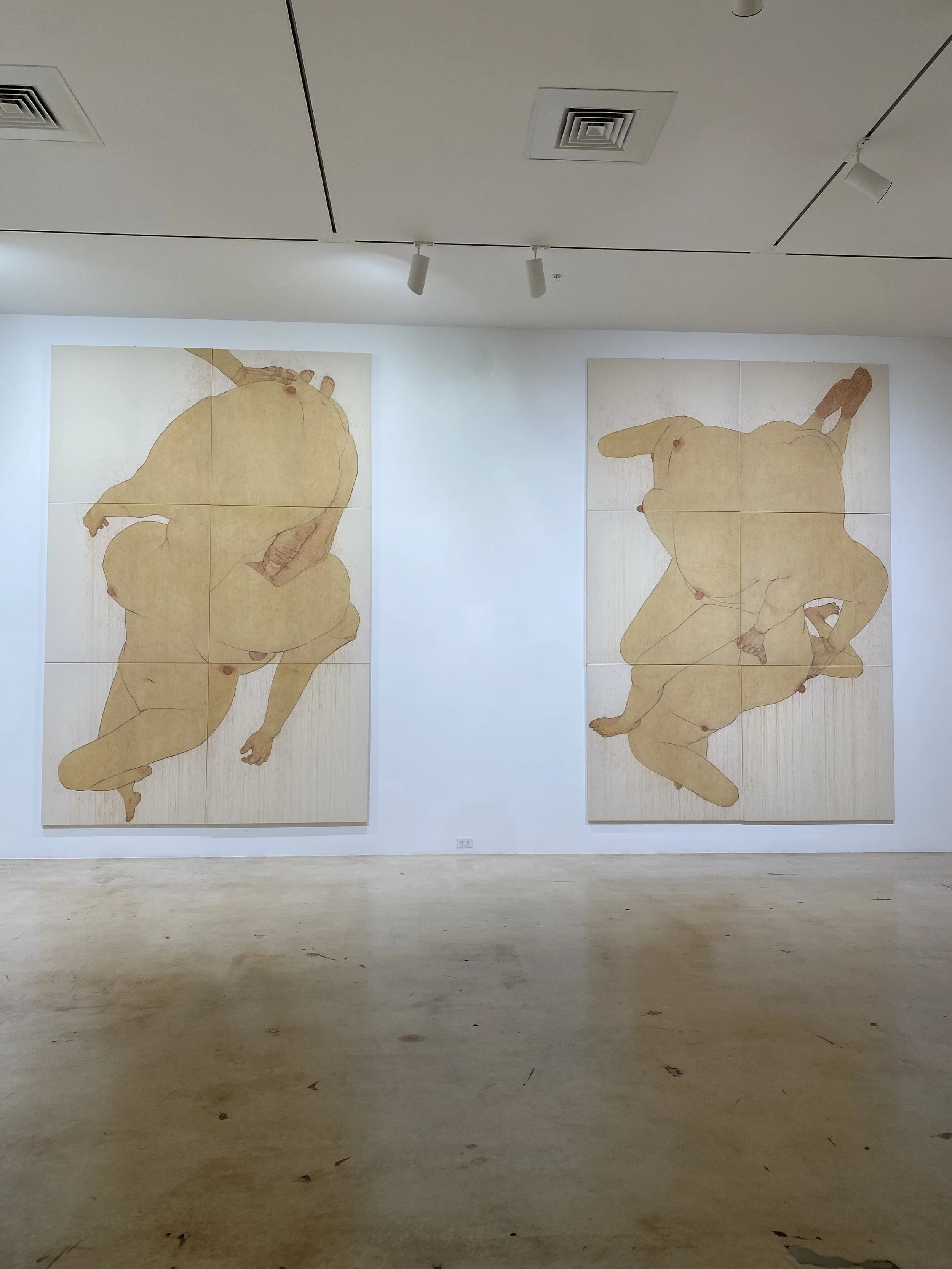
Body Cartography & Self Configuration, 2025, by Seung Ah Paik at The Rubell Museum Miami
In my practice, I explore the body as both subject and terrain— mutable site where self, image, and environment continuously intertwine. My paintings deconstruct the body into fragments, objects, and gestures viewed from shifting perspectives, dissolving the fixed boundaries between the observer and the observed This fragmentation invites a sense of both intimacy and estrangement, where the distance between self and image blurs.
The canvas functions as an extension of skin-a living surface that records touch, pressure, and time. Each mark becomes a trace of presence, transforming the act of painting into an embodied gesture. The body unfolds across this surface not as a static form, but as an evolving map of identity in motion -neither whole nor broken, but perpetually forming itself through the act of seeing and being seen.
Across recent series such as Body Cartography and Self Configuration, the figure and ground are in constant negotiation. In Body Cartography, the body opens into landscape, merging the organic with the abstract, intimacy with detachment. In Self Configuration, the background becomes an active field of memory, where remnants of process-stains, gestures, and absences-hold what has passed through. Here, fragmented forms begin to cohere, suggesting a quiet objectivity: presence revealed not through depiction, but through the lived record of time itself.
Together, these works trace a shifting continuum between interior and exterior, self and environment. Through this ongoing transformation, the body becomes both personal and universal —a site where identity, perception, and material reality unfold in motion.—from the artist
AURORE publishes real sexy stories based on your own best experiences.
Whether you’re looking to learn a few new moves or interested to explore a whole collection of erotic stories, we have something for everyone. Become a member to access over 300 sexy stories for endless inspiration and titillation. You can browse through our free teasers here to get a taste.